











AI Growth Is Creating a New Challenge: Energy Infrastructure
Artificial intelligence is transforming industries worldwide.
The rapid development of large language models (LLMs) and AI applications has driven unprecedented demand for computing capacity. From AI training clusters to large-scale inference platforms, data centers are entering a new era of higher power density and greater energy complexity.
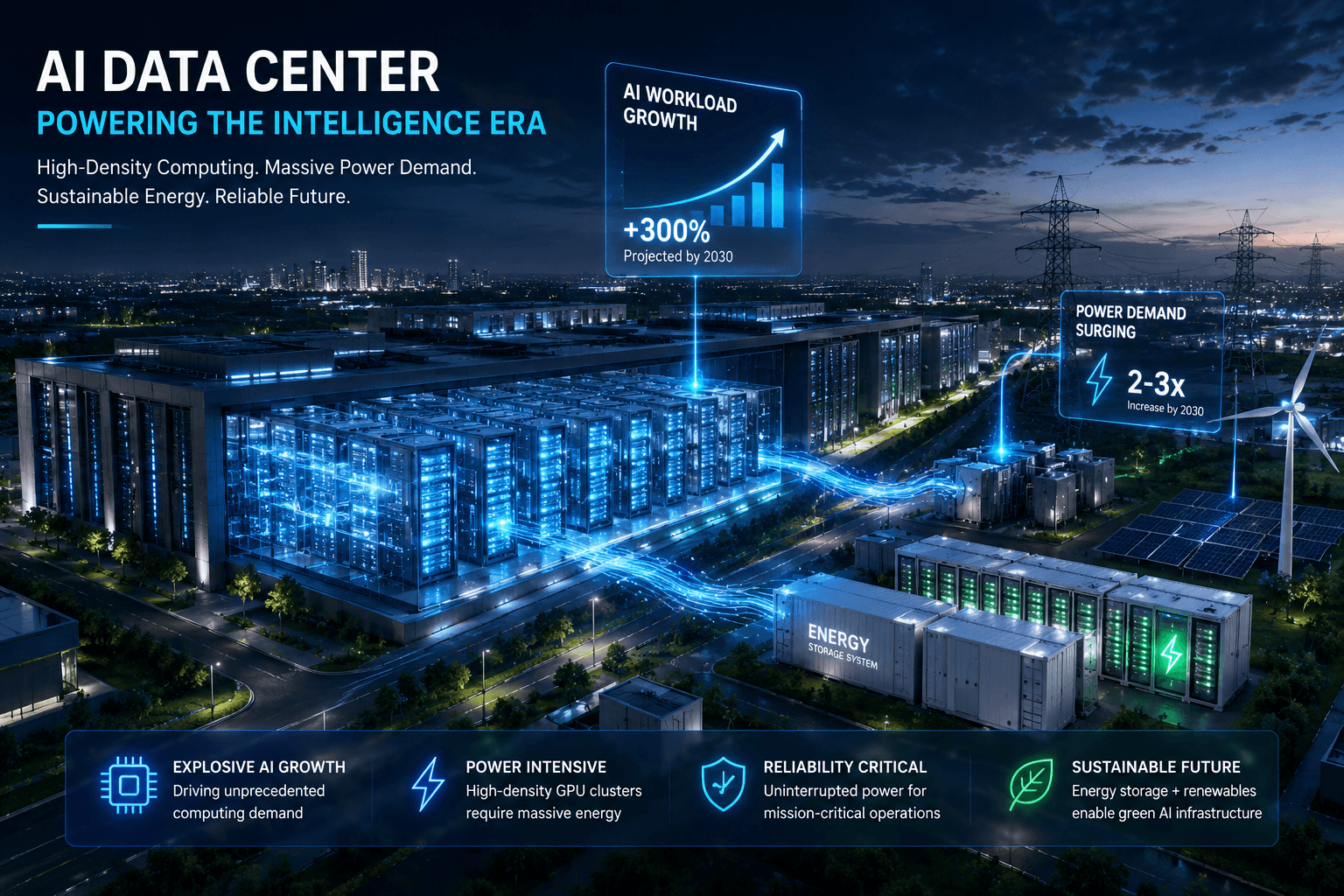
According to industry forecasts, global data center electricity consumption is expected to continue growing significantly in the coming years, with AI workloads becoming one of the primary drivers of this increase.
However, as AI data centers (AIDCs) scale from megawatt-level facilities toward hundreds of megawatts and even gigawatt-scale infrastructure, energy availability is becoming a critical factor influencing future expansion.
The next stage of AI development will depend not only on computing power, but also on the ability to build reliable, flexible, and sustainable energy systems.
The Energy Challenges Facing AI Data Centers
Compared with traditional data centers, AIDCs require significantly higher power density and more advanced energy management capabilities.
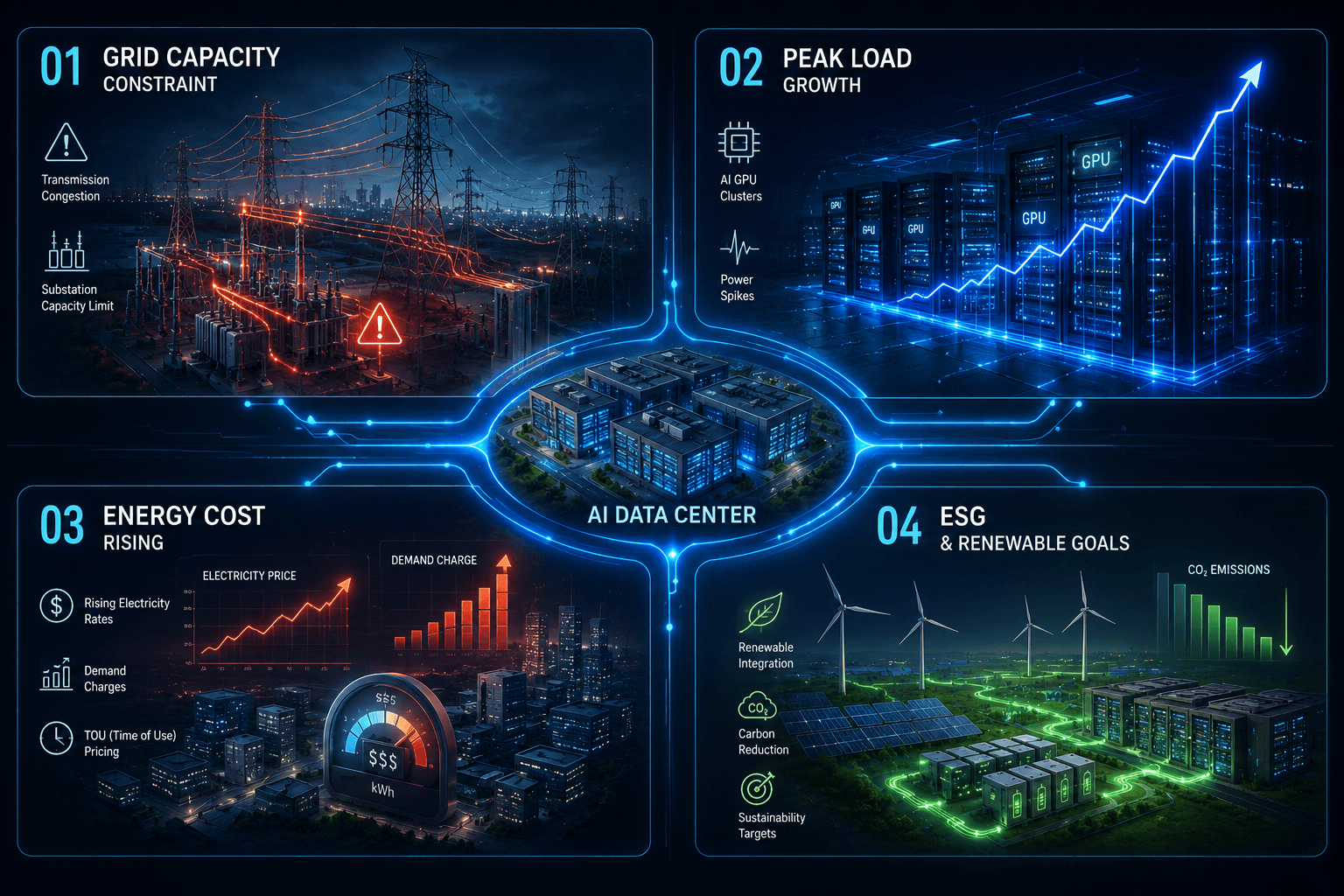
Several key challenges are emerging.
- Limited Grid Capacity
In many regions, available grid capacity is becoming a major constraint for new data center development.
Leading data center markets are increasingly facing challenges such as:
- Longer grid connection timelines
- Limited transformer and substation capacity
- Increasing competition for available power resources
As a result, power availability is becoming an important consideration in data center site selection and project planning.
- Increasing Peak Power Demand
AI workloads are highly power-intensive.
The power consumption of advanced GPU servers has increased significantly, with rack densities moving from traditional levels toward tens of kilowatts and beyond.
Large-scale AI training operations can create substantial power fluctuations, requiring more responsive and flexible energy management solutions.
Maintaining stable power delivery is becoming essential for ensuring reliable AI operations.
- Rising Energy Costs
Energy has become one of the most significant operational expenses for large-scale data centers.
Increasing electricity prices, demand charges, and changing tariff structures are driving operators to explore more efficient energy management strategies.
Improving energy efficiency and optimizing electricity costs are becoming critical for long-term data center competitiveness.
- Renewable Energy Integration Challenges
Many global data center operators are pursuing renewable energy targets and carbon reduction commitments.
However, renewable sources such as solar and wind are naturally variable.
Energy storage provides an effective solution by balancing renewable generation, improving renewable energy utilization, and supporting a more sustainable power architecture.
How Energy Storage Supports AI Data Centers
Energy storage is evolving from a traditional backup solution into a key component of modern data center energy infrastructure.
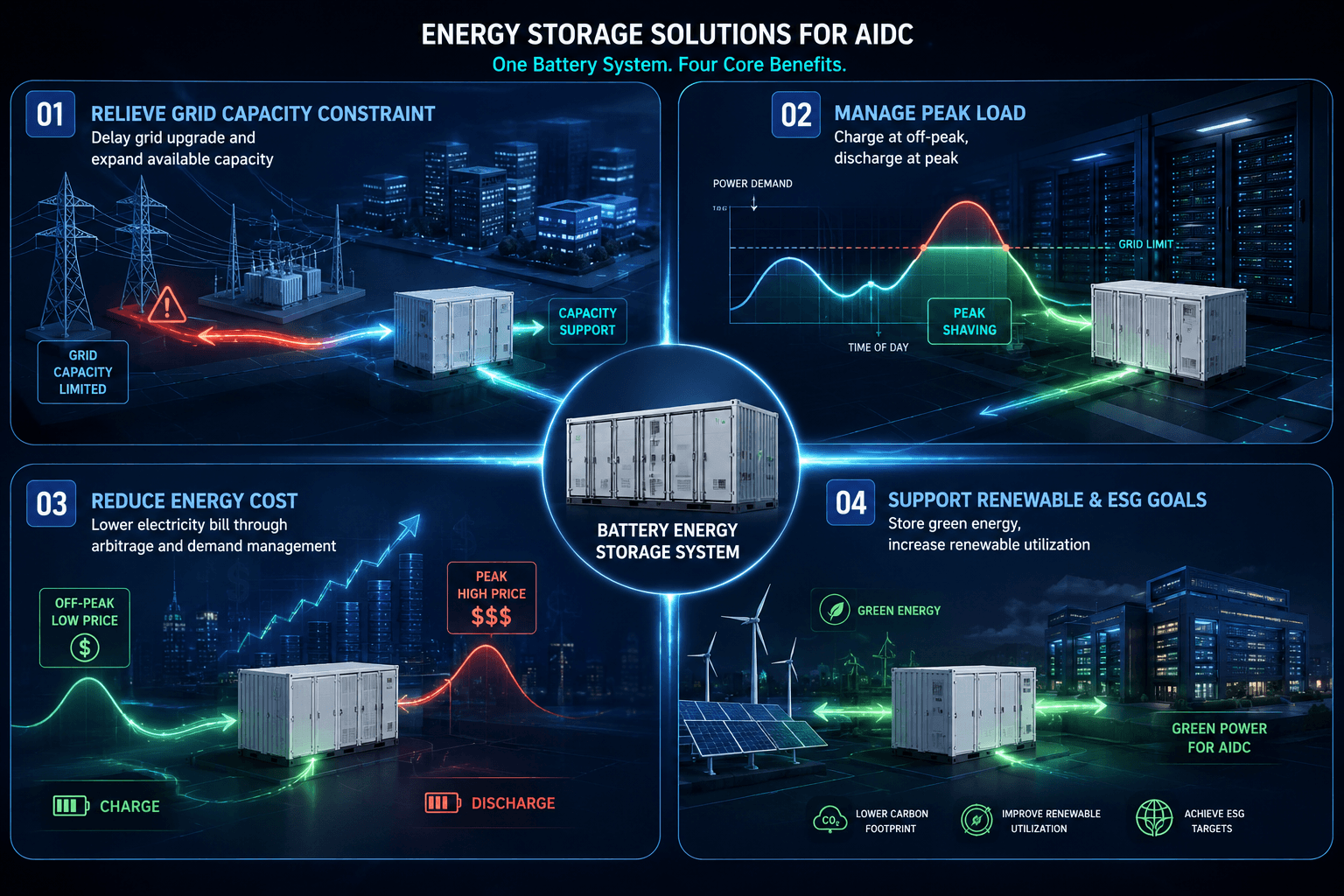
Improving Energy Efficiency and Reducing Costs
By charging during lower-cost periods and discharging during peak-price periods, energy storage enables:
- Peak shaving
- Demand charge reduction
- Energy cost optimization
For continuously operating AI data centers, these capabilities can significantly improve operational economics.
Supporting Grid Capacity and Faster Deployment
In areas where grid capacity cannot immediately meet data center demand, energy storage can provide additional power flexibility.
For example:
A data center requiring 50MW of capacity may temporarily face a grid connection limit of 30MW.
Energy storage can help bridge this gap by providing additional peak power support and reducing dependence on immediate grid expansion.
This approach can accelerate project deployment and improve infrastructure flexibility.
Enhancing Reliability and Resilience
Power reliability remains one of the highest priorities for data centers.
Traditional backup solutions rely primarily on UPS systems and diesel generators.
Modern battery energy storage systems can complement existing backup infrastructure by providing:
- Fast response capability
- Extended backup duration
- Improved system resilience
- Reduced maintenance requirements
For high-availability data centers, energy storage is becoming an important part of future reliability strategies.
From Backup Power to Strategic Energy Asset
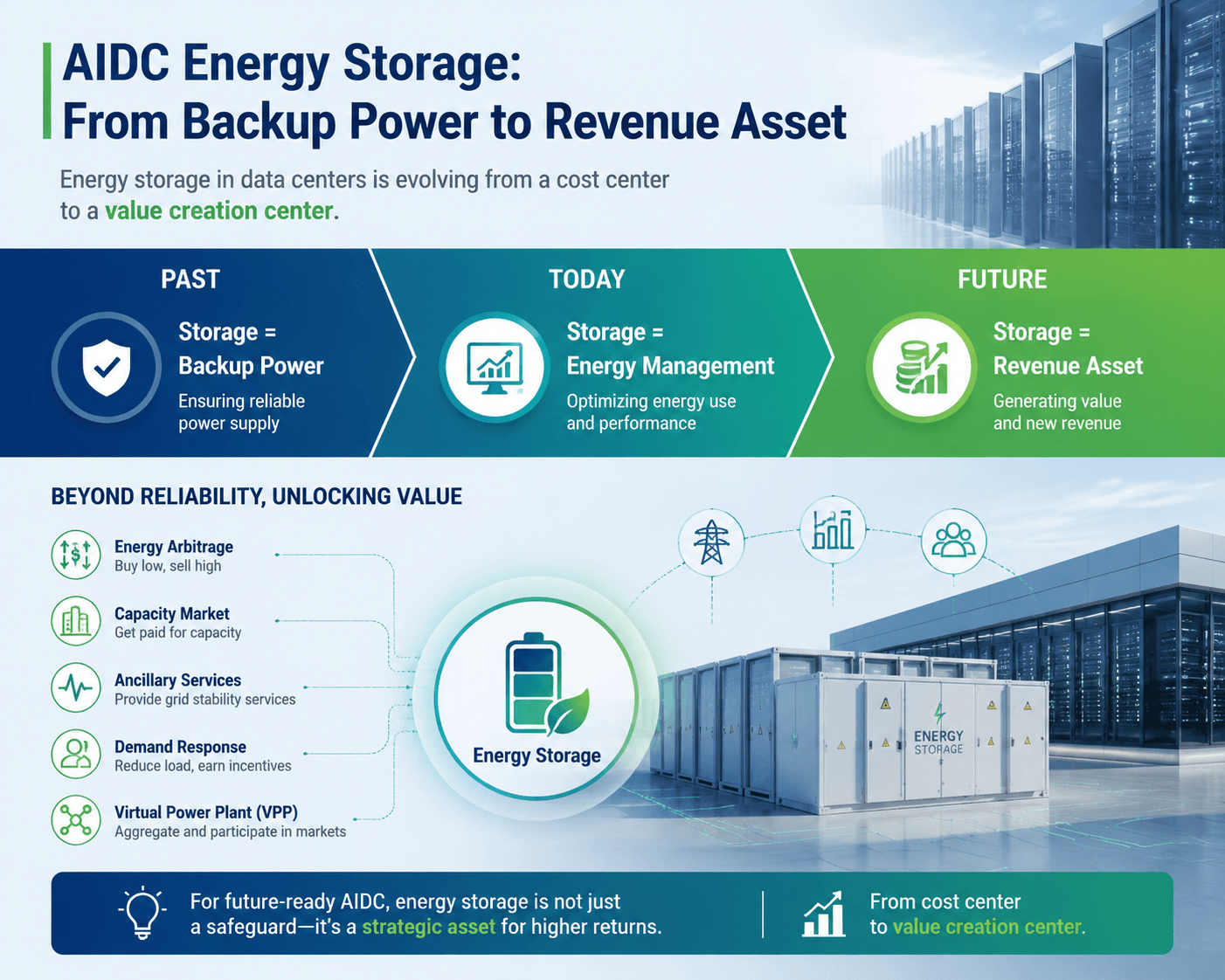
The role of energy storage in data centers is changing.
Historically:
Energy Storage = Backup Power
Today:
Energy Storage = Energy Management
Tomorrow:
Energy Storage = Strategic Energy Asset
Beyond ensuring reliable power supply, storage systems can participate in broader energy applications, including:
- Energy arbitrage
- Demand response
- Ancillary services
- Virtual power plant (VPP) applications
As energy markets evolve, storage has the potential to transform from an operational cost into a value-generating asset.
Gooree’s Approach to AI Data Center Energy Solutions
As a provider of integrated energy storage solutions, Gooree is actively developing solutions for the emerging AI data center market.
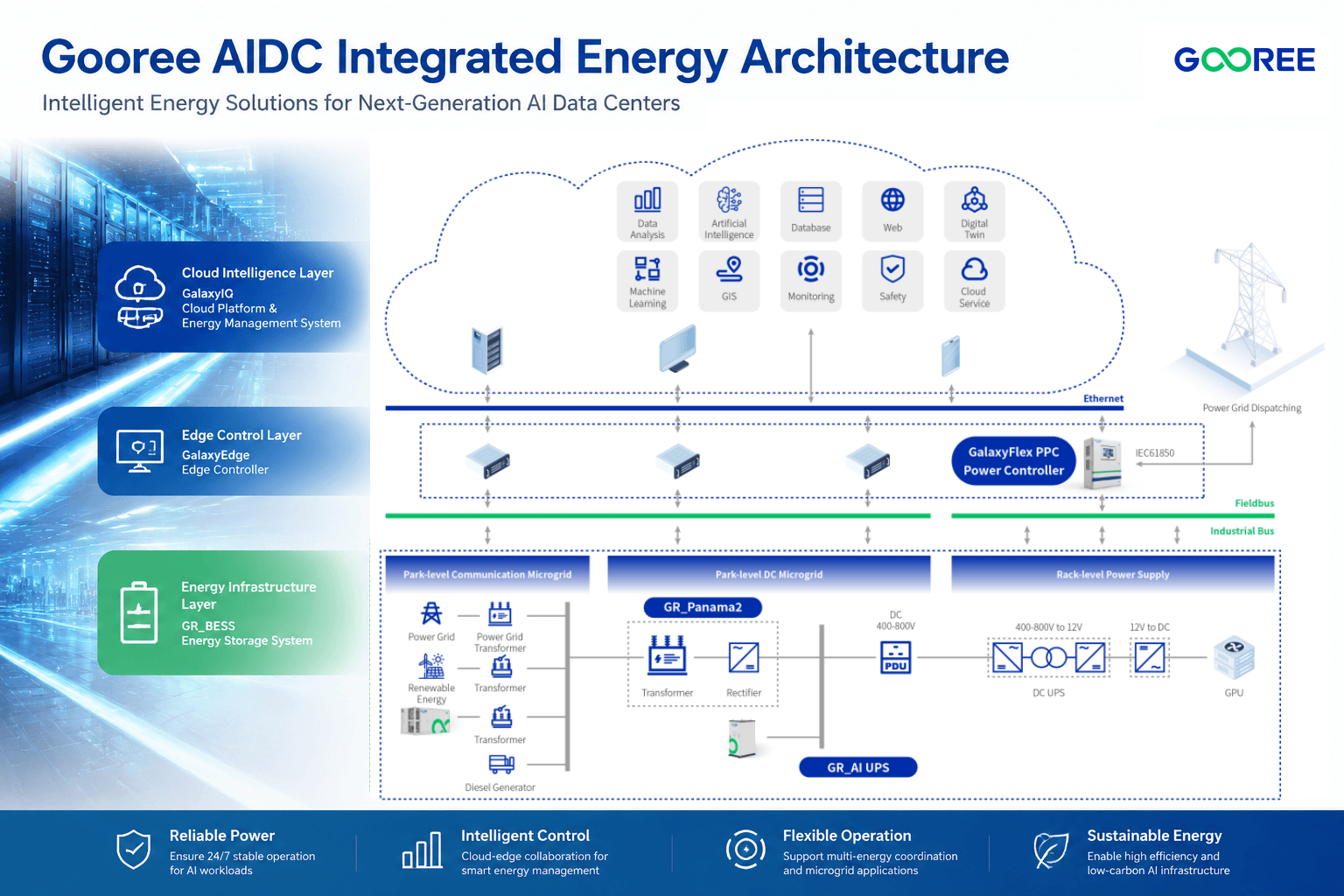
Leveraging expertise in:
- Commercial and industrial energy storage
- Utility-scale energy storage systems
- Intelligent energy management platforms
Gooree is building an integrated energy ecosystem designed to support future AIDC applications.
Key areas include:
Advanced Energy Storage Systems for AIDC
Gooree provides highly reliable and efficient energy storage solutions designed to support demanding data center environments.
These solutions focus on:
- High safety standards
- Flexible deployment
- Long-term operational reliability
- Intelligent energy optimization
Intelligent EMS Energy Management Platform
Through advanced Energy Management Systems (EMS), Gooree enables coordinated operation between:
- Battery energy storage systems
- Solar PV
- Grid power
- Backup generators
- Other distributed energy resources
This helps data centers achieve smarter and more efficient energy utilization.
GalaxyFlex PPC for Intelligent Power Control
Gooree’s GalaxyFlex Power Plant Controller (PPC) provides advanced control capabilities for large-scale energy systems and microgrid applications.
By enabling:
- Real-time power regulation
- Multi-source coordination
- Grid interaction management
- Flexible energy dispatch
GalaxyFlex PPC supports more intelligent and resilient energy infrastructure.
The Future of AI Depends on Energy Innovation
AI is changing how the world works.
But the future scale of AI will ultimately depend on energy infrastructure.
The next generation of data centers will require more than advanced computing hardware.
They will need:
- Reliable power supply
- Flexible energy management
- Sustainable energy solutions
Energy storage is becoming a fundamental building block of this new infrastructure.
At Gooree, we believe the future of AI will be shaped by the integration of computing power and intelligent energy systems.
Computing power drive
AI Data Centers and Energy Storage: Building the Power Infrastructure for the Next Generation of Computing
AI Growth Is Creating a New Challenge: Energy Infrastructure
Artificial intelligence is transforming industries worldwide.
The rapid development of large language models (LLMs) and AI applications has driven unprecedented demand for computing capacity. From AI training clusters to large-scale inference platforms, data centers are entering a new era of higher power density and greater energy complexity.
According to industry forecasts, global data center electricity consumption is expected to continue growing significantly in the coming years, with AI workloads becoming one of the primary drivers of this increase.
However, as AI data centers (AIDCs) scale from megawatt-level facilities toward hundreds of megawatts and even gigawatt-scale infrastructure, energy availability is becoming a critical factor influencing future expansion.
The next stage of AI development will depend not only on computing power, but also on the ability to build reliable, flexible, and sustainable energy systems.
The Energy Challenges Facing AI Data Centers
Compared with traditional data centers, AIDCs require significantly higher power density and more advanced energy management capabilities.
Several key challenges are emerging.
- Limited Grid Capacity
In many regions, available grid capacity is becoming a major constraint for new data center development.
Leading data center markets are increasingly facing challenges such as:
- Longer grid connection timelines
- Limited transformer and substation capacity
- Increasing competition for available power resources
As a result, power availability is becoming an important consideration in data center site selection and project planning.
- Increasing Peak Power Demand
AI workloads are highly power-intensive.
The power consumption of advanced GPU servers has increased significantly, with rack densities moving from traditional levels toward tens of kilowatts and beyond.
Large-scale AI training operations can create substantial power fluctuations, requiring more responsive and flexible energy management solutions.
Maintaining stable power delivery is becoming essential for ensuring reliable AI operations.
- Rising Energy Costs
Energy has become one of the most significant operational expenses for large-scale data centers.
Increasing electricity prices, demand charges, and changing tariff structures are driving operators to explore more efficient energy management strategies.
Improving energy efficiency and optimizing electricity costs are becoming critical for long-term data center competitiveness.
- Renewable Energy Integration Challenges
Many global data center operators are pursuing renewable energy targets and carbon reduction commitments.
However, renewable sources such as solar and wind are naturally variable.
Energy storage provides an effective solution by balancing renewable generation, improving renewable energy utilization, and supporting a more sustainable power architecture.
How Energy Storage Supports AI Data Centers
Energy storage is evolving from a traditional backup solution into a key component of modern data center energy infrastructure.
Improving Energy Efficiency and Reducing Costs
By charging during lower-cost periods and discharging during peak-price periods, energy storage enables:
- Peak shaving
- Demand charge reduction
- Energy cost optimization
For continuously operating AI data centers, these capabilities can significantly improve operational economics.
Supporting Grid Capacity and Faster Deployment
In areas where grid capacity cannot immediately meet data center demand, energy storage can provide additional power flexibility.
For example:
A data center requiring 50MW of capacity may temporarily face a grid connection limit of 30MW.
Energy storage can help bridge this gap by providing additional peak power support and reducing dependence on immediate grid expansion.
This approach can accelerate project deployment and improve infrastructure flexibility.
Enhancing Reliability and Resilience
Power reliability remains one of the highest priorities for data centers.
Traditional backup solutions rely primarily on UPS systems and diesel generators.
Modern battery energy storage systems can complement existing backup infrastructure by providing:
- Fast response capability
- Extended backup duration
- Improved system resilience
- Reduced maintenance requirements
For high-availability data centers, energy storage is becoming an important part of future reliability strategies.
From Backup Power to Strategic Energy Asset
The role of energy storage in data centers is changing.
Historically:
Energy Storage = Backup Power
Today:
Energy Storage = Energy Management
Tomorrow:
Energy Storage = Strategic Energy Asset
Beyond ensuring reliable power supply, storage systems can participate in broader energy applications, including:
- Energy arbitrage
- Demand response
- Ancillary services
- Virtual power plant (VPP) applications
As energy markets evolve, storage has the potential to transform from an operational cost into a value-generating asset.
Gooree’s Approach to AI Data Center Energy Solutions
As a provider of integrated energy storage solutions, Gooree is actively developing solutions for the emerging AI data center market.
Leveraging expertise in:
- Commercial and industrial energy storage
- Utility-scale energy storage systems
- Intelligent energy management platforms
Gooree is building an integrated energy ecosystem designed to support future AIDC applications.
Key areas include:
Advanced Energy Storage Systems for AIDC
Gooree provides highly reliable and efficient energy storage solutions designed to support demanding data center environments.
These solutions focus on:
- High safety standards
- Flexible deployment
- Long-term operational reliability
- Intelligent energy optimization
Intelligent EMS Energy Management Platform
Through advanced Energy Management Systems (EMS), Gooree enables coordinated operation between:
- Battery energy storage systems
- Solar PV
- Grid power
- Backup generators
- Other distributed energy resources
This helps data centers achieve smarter and more efficient energy utilization.
GalaxyFlex PPC for Intelligent Power Control
Gooree’s GalaxyFlex Power Plant Controller (PPC) provides advanced control capabilities for large-scale energy systems and microgrid applications.
By enabling:
- Real-time power regulation
- Multi-source coordination
- Grid interaction management
- Flexible energy dispatch
GalaxyFlex PPC supports more intelligent and resilient energy infrastructure.
The Future of AI Depends on Energy Innovation
AI is changing how the world works.
But the future scale of AI will ultimately depend on energy infrastructure.
The next generation of data centers will require more than advanced computing hardware.
They will need:
- Reliable power supply
- Flexible energy management
- Sustainable energy solutions
Energy storage is becoming a fundamental building block of this new infrastructure.
At Gooree, we believe the future of AI will be shaped by the integration of computing power and intelligent energy systems.
Gooree - Make Every kWh Trusted.